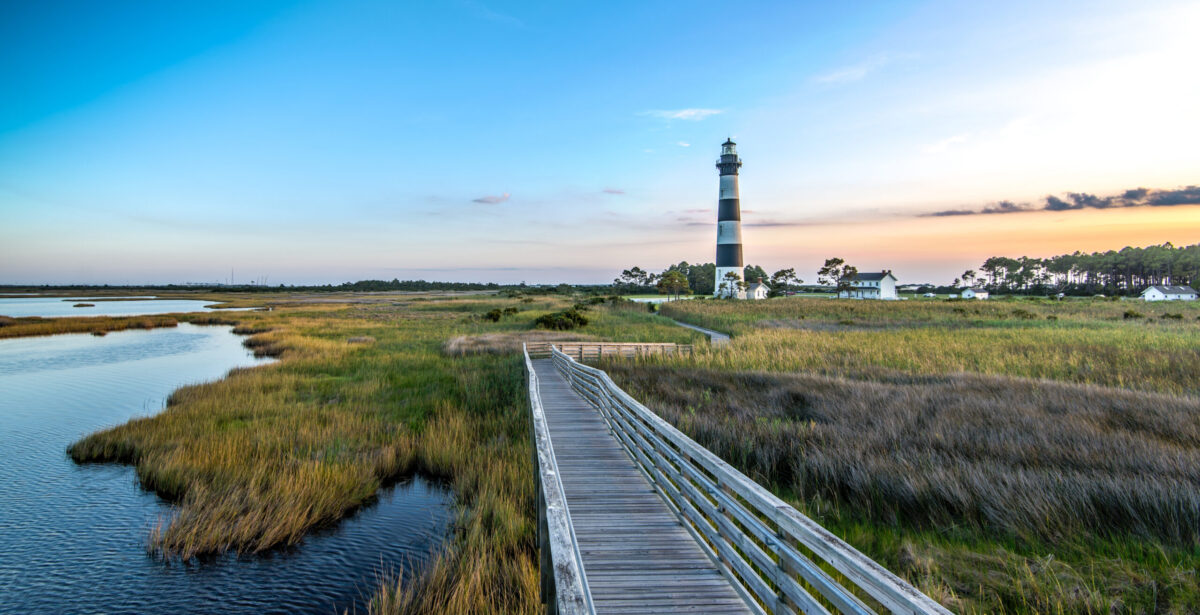
The Outer Banks weather by month offers a unique and ever-changing experience across North Carolina’s iconic coastal region. From wild windswept dunes to tranquil beach towns, the Outer Banks (OBX) present a different charm in every season. Understanding how the weather shifts each month can help you plan the perfect trip—whether you’re chasing waves, escaping crowds, or exploring maritime heritage.
January: Quiet Beauty and Winter Wildlife
January offers a serene introduction to the Outer Banks weather by month. Daytime highs hover around 50°F (10°C), with colder evenings dipping into the mid-30s. It’s not beach season, but it’s a time for uncrowded beauty and peaceful shell-strewn walks.
Pea Island National Wildlife Refuge transforms into a haven for birdwatchers. Over 400 species pass through, including snow geese and tundra swans. Bring layers and binoculars to experience a winter wildlife spectacle unique to the OBX.
While many beachside businesses temporarily close, gems such as Waveriders Coffee & Deli in Nags Head stay open for off-season visitors. Smaller communities like Hatteras Village and Ocracoke feel timeless—ideal for creativity, reflection, or personal retreats.
February: Stormy Skies and Tranquil Trails
February continues the off-season atmosphere with similar temps to January. The Outer Banks weather by month becomes slightly more dynamic, offering steady winds, rough surf, and opportunities for dramatic photography.
Frequent Nor’easters stir the sea—especially around Cape Hatteras National Seashore. The open-air Bodie Island Lighthouse trail remains accessible, offering windswept vistas over Roanoke Sound—even more scenic under brooding skies.
Indoor time is pleasant too. Quiet museums in Kill Devil Hills or the Wright Brothers National Memorial provide wind-inspired history. With fewer visitors, your experience becomes immersive and introspective.
March: Spring Stirring and Kiteboard Culture
March signals the seasonal shift. As spring awakens, OBX winds entice kiteboarders and surfers. Daily highs reach the upper 50s and low 60s°F, although the Atlantic remains chilly at roughly 50°F.
Adventure seekers head to Canadian Hole near Avon. Local outfitters like REAL Watersports begin lessons with dry suits, helping early visitors make the most of those brisk breezes.
Families enjoy Jockey’s Ridge State Park—home to the tallest sand dunes on the East Coast. March winds make these dunes ideal for soaring kites, exploring sandy trails, or just enjoying wide-open skies.
April: Blossoms, Breezes, and Family-Friendly Fun
April’s Outer Banks weather by month shows its soft side. Expect highs in the 70s°F, gentle spring warmth, and more sunshine. Beach towns start to wake up, offering a peaceful yet active atmosphere.
Historic Roanoke Island shines this time of year. Enjoy the Elizabethan Gardens blooming in vivid color, then explore the Roanoke Island Festival Park—a hands-on historical site kids and adults love.
Calm waters return, making April great for kayaking. Paddle through quiet creeks near Duck with tour guides from Coastal Kayak Touring Company, who offer rich local insights as you glide through shaded marshes.
May: Mild Sunshine and Hidden Summer
May might be the crown jewel of Outer Banks weather by month. With highs in the upper 70s to low 80s°F and water temps climbing into the 60s°F, this shoulder season offers the best blend of comfort and freedom.
Most restaurants reopen fully by mid-month, including sizzle-season staples like The Blue Point and Duck Donuts. May’s ample daylight and lower crowd levels make it ideal for kite flying, long bike rides, or scenic lighthouse climbs—especially at Currituck Beach Light.
Explore lesser-traveled areas like Buxton or Frisco, where you’ll find affordable lodging and expansive empty beaches. Or join off-road tours in Corolla to witness the area’s famous wild horses roaming the dunes.
June: Crowd-Ready and Kite-Flying Skies
School’s out and summer officially begins. June’s weather averages mid-80s°F with Atlantic waters warming past 70°F. The beach becomes the main stage, with families flocking in for sand, surf, and sunshine.
Hot spots like Kill Devil Hills thrive this time of year. Cool down with frozen treats from Booty Treats or watch the sky fill with vibrant fabric during the Rogallo Kite Festival at Jockey’s Ridge—a tribute to OBX’s aeronautical legacy.
Evening entertainment features free movies, pirate tales, and fireflies. Popular ferry routes to Ocracoke and Cedar Island book fast, so reserve early to explore this charming, car-light island community.
July: Sizzling Sunshine and Celebration Peaks
July brings the hottest Outer Banks weather by month. Expect high 80s to low 90s°F and the Atlantic peaking in the mid-70s°F—perfect for full days at the beach. This is peak season, so plan ahead for accommodations and events.
Fishing, surfing, and boating are in full swing. Charter boats depart from Oregon Inlet daily, dolphin cruises skim along Roanoke Sound, and early risers enjoy the calm shoreline before crowds arrive.
Fourth of July celebrations are a highlight. Jennette’s Pier and Duck Town Park host must-see fireworks and concerts. Pack reef-safe sunscreen, refuel often, and embrace the high-energy OBX culture in full bloom.
August: Heat Waves and Shaded Wonders
August continues summer’s tempo but adds a humid twist. Temperatures remain in the 80s°F, and UV indexes often rise. The key to comfort lies in shaded trails, early mornings, and cooling water activities.
Escape the heat beneath the canopy of Buxton Woods Coastal Reserve. This quiet forest hides freshwater ponds and botanical wonders like Venus flytraps. For aquatic fun, rent paddleboards in Duck or explore winding soundside canals by kayak.
Scuba diving thrives in August. The OBX, nicknamed the “Graveyard of the Atlantic,” offers shipwreck dives for certified adventurers. Outfitters in Hatteras and Ocracoke lead expeditions that showcase submerged WWII wrecks and Civil War relics.
September: Secret Summer and Shifting Seasons
Rounding out Outer Banks weather by month is September—a cherished time for locals. With warm days (mid-70s to low 80s°F) and warm water, it’s summer without the crowds. School’s back, and serenity returns.
Nature is generous in September. Fishing heats up with migratory runs, surfers revel in strong swells, and the light takes on a golden, photogenic hue. Eat osprey-viewed dinners and stroll moonlit beaches with room to breathe.
Signature events such as the Outer Banks Seafood Festival start prepping in late September. Visitors without tight schedules will find peace, value, and pleasant weather all at once.
Plan Your Visit with Outer Banks Weather by Month in Mind
From chilly birdwatching trails to sunny waves and secret seasonal sweet spots, understanding Outer Banks weather by month helps you time your escape perfectly. Whether you’re a beachcomber, adventure junkie, or history buff, OBX has a season that matches your travel style. Explore more and let each month reveal a different soul of the Outer Banks.
Share This Page